
Travelling with Oxygen – Portable Oxygen Concentrator
On my recent holiday with Limitless Travel, an accessible travel company that specialises in holidays for disabled people, I met Diane, whom I now consider a dear friend. Diane had been diagnosed with interstitial lung disease a few years ago and needed oxygen whenever she was moving or walking, so travelling with oxygen was a brand new experience for her. She had finally plucked up the courage to try and start travelling with oxygen for the first time, but she quickly realised there wasn’t much clear information online, so I said we’d create it!
In this post, you’ll find out how she used a portable oxygen concentrator to enjoy her first cruise with this new condition, plus a video showing all our holiday fun and practical tips to help others plan their own accessible adventures.

Diane’s Story
Diane was recently diagnosed with interstitial lung disease and needs oxygen when she’s moving or walking. At home, she uses oxygen tanks, but on a setting of 4 out of 15 they only last about 30–40 minutes. They’re extremely difficult to get around with, and even harder to travel with. You can get tanks that last longer, but they’re even bigger and therefore more difficult to take when travelling with oxygen.
When Diane booked her trip, she had a chat with her consultant, who said she was fine to travel. The consultant wrote that in her report, just in case she needed proof. She also told Diane about portable oxygen concentrators. After a test with her oxygen therapist to see if she could use one (breathing through her nose), it was added to her prescription.
Switching to a Portable Oxygen Concentrator
A portable oxygen concentrator is a game-changer for travelling with oxygen. Diane’s has two batteries, each lasting around 3 hours, giving her up to 6 hours of oxygen for a day out. She didn’t always need it, but in warmer ports like Cadiz she used it more often and because it was so hot, we ended up heading back to the ship to change batteries and have lunch onboard instead.
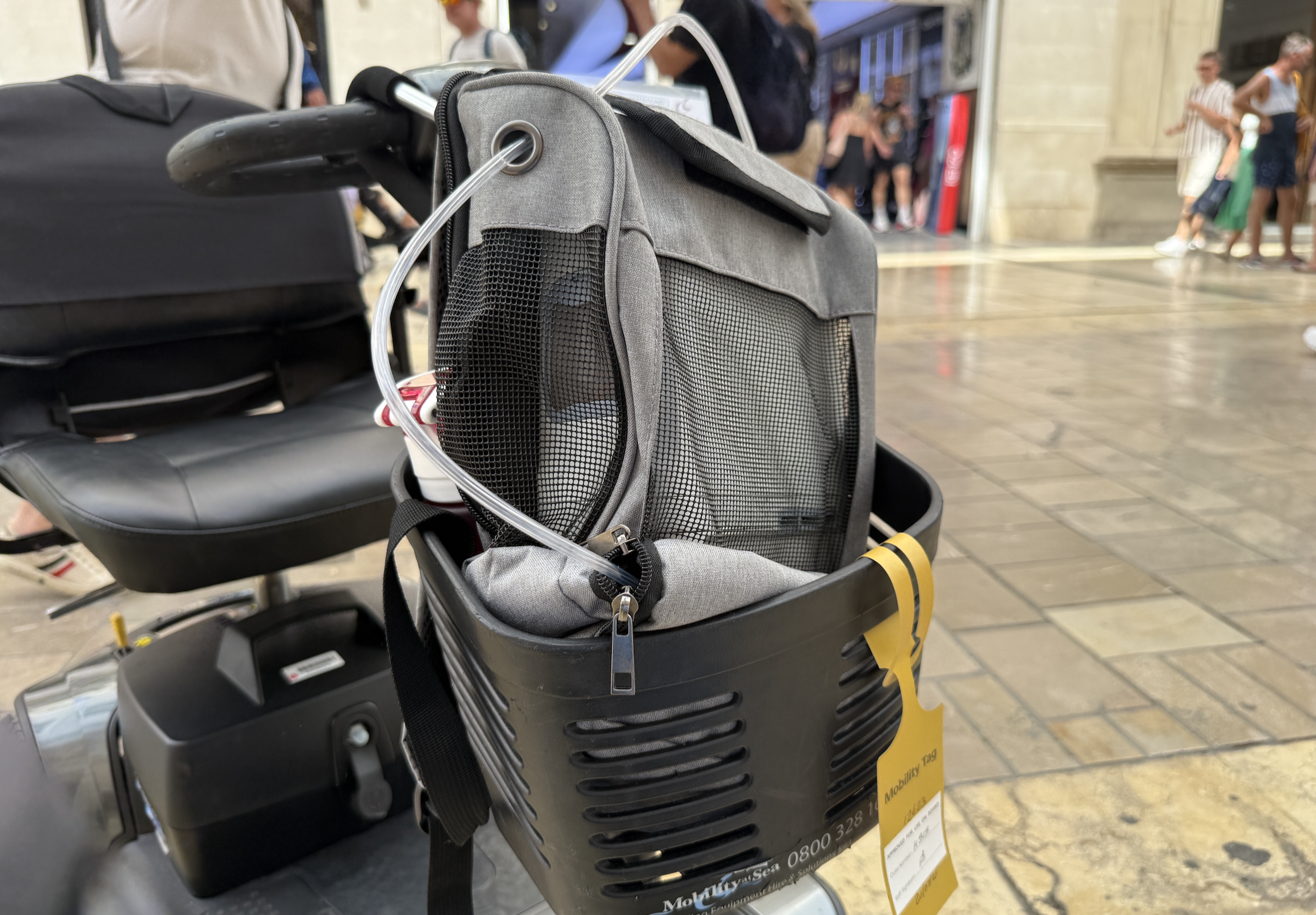
It’s not light, though. Diane says it’s really heavy and uncomfortable to wear in a backpack, especially in the heat. On the cruise, if she wasn’t carrying it in her bagback, she sometimes kept it in the front of her mobility scooter, or the Limitless Travel team helped her carry it. Specialist carry bags are available, and Diane recommends looking into those if you’re planning to travel with one.
Just make sure that it’s easy to carry, like a bagback and breathable but it’d definitely best to buy a specialist bag designed for the exact unit you get.
Travelling with Limitless Travel
This was Diane’s first holiday since her diagnosis, and she booked with Limitless Travel, a company founded by disabled travellers to make holidays more accessible.They took care of everything with P&O, including any questions about her equipment for travelling with oxygen. Diane didn’t have to supply medical documents and Limitless handled all the booking and coordination.
They also supported her in using a mobility scooter for the first time and were always on hand to help with her oxygen concentrator. Diane says she wouldn’t have been able to travel without their support, and she’s already looking at booking another holiday with them.
Travelling with Oxygen on a Cruise
-
You must inform the cruise line of any equipment you’re bringing (in this case Limitless took care of that)
-
There are plenty of outlets in the cabin to charge batteries and other medical equipment.
-
For port days, take both batteries with you, even if you don’t think you’ll need them.
-
Excursions with accessible transport, like Limitless Travel’s private buses, can help save battery use.
-
If you use your concentrator in water-related activities, like Diane after swimming or getting into cold water, be mindful of your battery time.
Diane’s Tips for Travelling with Oxygen
-
Speak to your consultant before booking.
-
Ask your oxygen therapist about a portable oxygen concentrator and whether it’s right for you.
-
You can buy these devices yourself – not just through prescriptions.
-
Invest in a good, breathable bag or specialist carry case.
-
Choose a travel company that understands accessibility and can handle the arrangements for you.
Diane’s experience shows that travelling with oxygen, even on a cruise, is absolutely possible. With the right equipment, good planning, and the support of an accessible travel company, you can still enjoy exploring new places.
This trip hasn’t just been a massive success for Diane; it’s inspired her to travel more now she knows it’s possible. And by sharing her story here, we hope it will inspire others who are thinking about travelling with oxygen too.
Please let us know if you have any questions below or advice for other people.
