
Bohemian Cobblestones of Prague and the Imperial Majesty of Vienna – Crossing Central Europe
Central Europe rewards slow travel more than almost anywhere else on the continent – the cities are compact, the rail connections between them are straightforward, and the history layered into every street corner takes time to read properly. This article covers Prague and Vienna in depth, then moves through Budapest and the wider Central European region, looking at what each city delivers and how to approach the corridor as a single coherent journey.
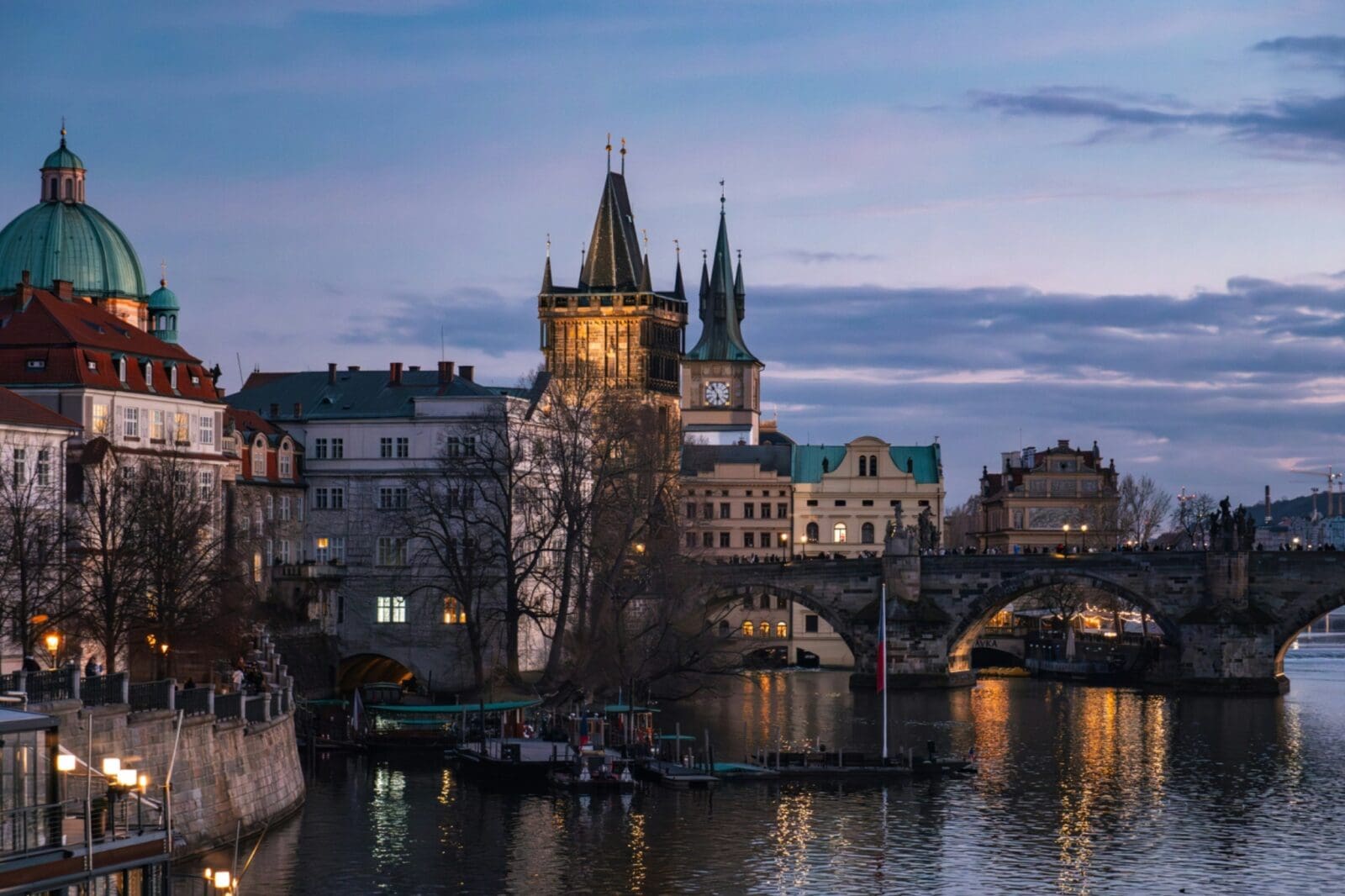
Prague – Stone Bridges and a City That Survived the Twentieth Century
Prague’s survival of the Second World War largely intact is the single fact that explains more about the city than any other. While Warsaw, Dresden, and Rotterdam were reduced to rubble, Prague emerged with its medieval core essentially whole – the Gothic churches, Baroque palaces, Renaissance town halls, and Art Nouveau apartment buildings are not reconstructions but originals, and walking through Staré Město on a quiet morning carries a physical weight that rebuilt cities cannot replicate. Charles Bridge, the fourteenth-century stone crossing over the Vltava lined with thirty Baroque statues of saints added between 1683 and 1714, is the most visited point in the city and genuinely deserves the attention – arrive before seven in the morning and you will share it with almost nobody. Prague Castle on the hill above the river is the largest ancient castle complex in the world by area, covering 70,000 square metres, and contains within its walls a cathedral, a royal palace, galleries, gardens, and a street of medieval goldsmiths’ houses that now sell tourist goods but retain their original scale and character. The Jewish Quarter of Josefov, compressed into six synagogues and a cemetery where twelve layers of burials are stacked on top of each other due to the limited land available, covers a history of persecution and resilience that sits uncomfortably alongside the luxury boutiques now occupying the surrounding streets. Vinohrady and Žižkov, the residential neighbourhoods east of the historic centre, have a café and bar culture that operates entirely for local consumption and gives a more accurate picture of how Prague actually lives than the tourist-facing streets of the old town. The Prague to Vienna train on the Railjet service takes around four hours through the South Bohemian countryside and the Austrian wine regions of the Weinviertel – a journey that passes through terrain most visitors to either city never see.
Vienna – Ringstrasse, Coffee Houses and the Weight of Empire
Vienna was the capital of the Habsburg Empire for six centuries, and the city’s architecture reflects an ambition to project permanence and cultural authority that outlasted the empire itself by over a hundred years. The Ringstrasse, the grand boulevard Emperor Franz Joseph ordered built in the 1860s to replace the old city walls, is lined with institutions – the Opera House, the Kunsthistorisches Museum, the Natural History Museum, Parliament, the Rathaus, the Burgtheater – each designed in a different historical style to signal the breadth of Habsburg cultural inheritance. The Kunsthistorisches Museum’s collection of Flemish, Dutch, and Italian paintings accumulated through centuries of Habsburg patronage is one of the four or five most significant in the world, and the building’s interior – marble staircases, gilded ceilings, inlaid floors – is as carefully considered as anything hanging on its walls. Vienna’s coffee house culture is not a tourist affectation but a functioning social institution – the Viennese café as a place to sit for hours with a single Melange, read the newspapers provided on wooden frames, and conduct business or conversation at a pace the city outside seems designed to accommodate. Café Central in the Palais Ferstel, Café Hawelka in the first district, and the less-visited Café Schwarzenberg on the Ringstrasse each have distinct characters worth comparing across a few mornings. The Naschmarkt, a 1.5-kilometre open-air market running along the Wienzeile, sells Austrian, Turkish, Balkan, and Asian produce from stalls that have occupied the same spots for generations and draws a genuinely mixed clientele of residents, chefs, and visitors.
Crossing to Budapest – The Danube and a Different Kind of Capital
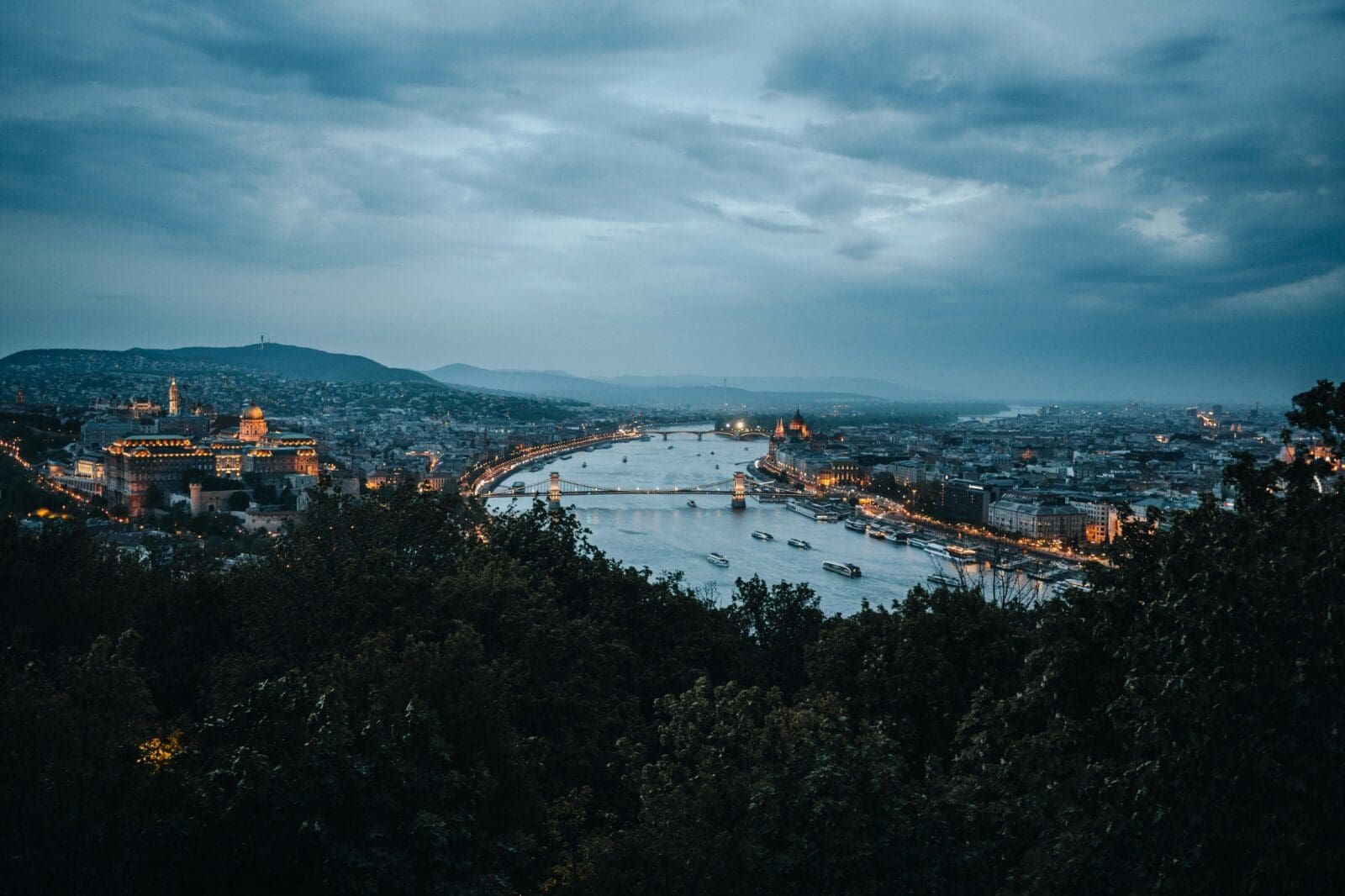
The train from Vienna to Budapest on the Railjet covers 280 kilometres in around two hours and forty minutes, following the Danube corridor through the Austrian lowlands and the Hungarian border region before arriving at Keleti Station – a grand nineteenth-century terminus whose ornate facade sets the tone for a city that built its public architecture with considerable ambition during the Austro-Hungarian period. Budapest is two cities – Buda on the hilly western bank and Pest on the flat eastern side – joined by eight bridges across the Danube, and the division still shapes how residents think about their city even if the administrative merger happened in 1873. The Hungarian Parliament Building on the Pest embankment, completed in 1904, is one of the largest parliament buildings in the world and its neo-Gothic spires reflected in the Danube at dusk are among the more photographed urban views in Europe – the interior, accessible on guided tours, contains the Hungarian crown jewels and staterooms of a scale that reflects the confidence of a nation at the height of its imperial period. The thermal bath culture in Budapest is not a spa industry grafted onto tourism but a genuine civic institution – Széchenyi in City Park, Gellért on the Buda side, and the older Rudas baths built during the Ottoman occupation in the sixteenth century each have distinct characters, and Hungarians use them as regularly as their grandparents did.
The Czech Countryside and Bohemian Spa Towns
Beyond Prague, the Czech Republic contains a regional geography that most visitors who fly in and out of the capital entirely miss. The Bohemian spa triangle – Karlovy Vary, Mariánské Lázně, and Františkovy Lázně – was the resort circuit of European royalty and aristocracy throughout the nineteenth century, and the colonnaded promenades, Belle Époque hotels, and mineral spring pavilions survive in a state of preservation that ranges from immaculate to pleasingly faded. Karlovy Vary, the largest of the three, has thirteen hot springs along its river valley and a film festival each July that brings an unlikely cosmopolitan energy to a town of 50,000 people. Český Krumlov in South Bohemia, a small town built inside a bend of the Vltava river beneath a castle whose tower is visible from every street, is accessible by bus from Prague or České Budějovice and warrants an overnight stay rather than a day trip – the town empties of tourists after five in the evening and the scale of the castle complex becomes properly readable without the crowds.
Slovakia and the Tatra Mountains
Bratislava, Slovakia’s capital, sits forty-five minutes by fast train from Vienna and is routinely underestimated by travellers who visit as a day trip and conclude it cannot compete with its neighbours. The old town is compact and genuinely well-preserved, the castle above it has views over the Danube into Austria and Hungary simultaneously, and the city’s restaurant and bar scene has developed considerably over the past decade without pricing out the local clientele that gives it character. The High Tatras in northern Slovakia are a genuinely Alpine range reaching 2,655 metres at Gerlachovský štít – the highest point in the Carpathians – with a network of mountain huts, cable cars, and marked trails that draws Polish and Czech hikers in numbers but remains largely unknown to western European visitors. The resort town of Štrbské Pleso sits beside a glacial lake at 1,346 metres and has rail access from Poprad in the valley below, making the mountains reachable without a car from the main intercity network.
Conclusion
Prague, Vienna, Budapest, and the regions between them cover a range of history, architecture, and landscape that few European corridors match in the same distance. The Railjet trains connecting them are comfortable and punctual, the cities are compact enough to explore on foot, and the smaller towns and countryside along the route reward the travellers who treat the journey itself as part of the destination rather than an obstacle between them. Three weeks covers the corridor properly; two weeks covers it adequately; anything less requires choices that are worth making deliberately.
